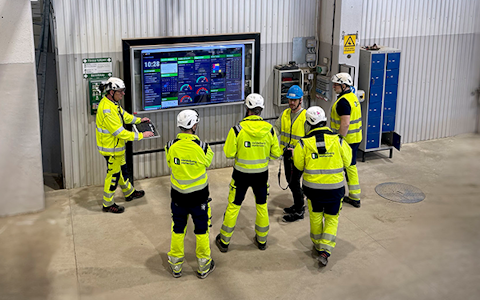
Digital dashboards that help you identify deviations and make the right decisions.
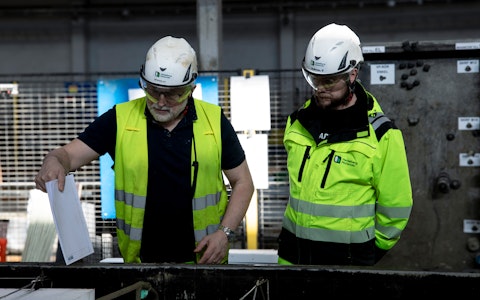
Capture your deviations and turn them into improvements
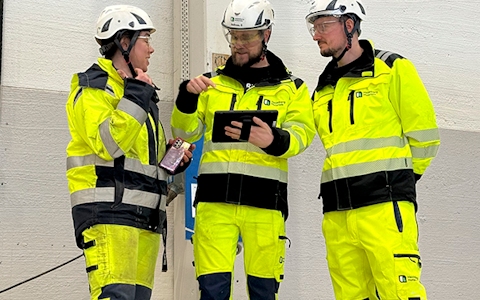
Continuous improvement, Kaizen boards, PDCA and other tools.
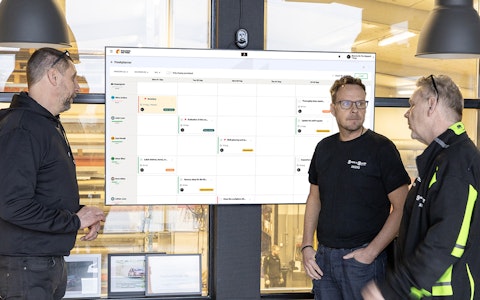
All your team’s tasks, neatly organized in one weekly view.
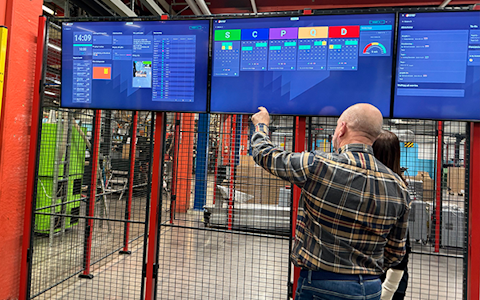
Improve key performance indicators within your specific focus areas with our SQCDP board.
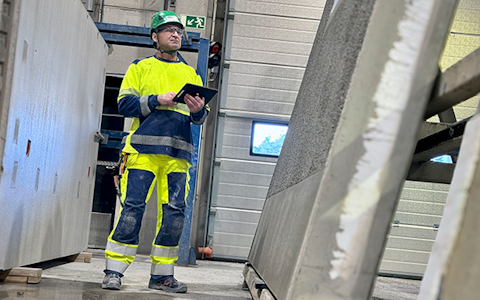
Use the PDCA cycle as a tool to improve both quality and processes
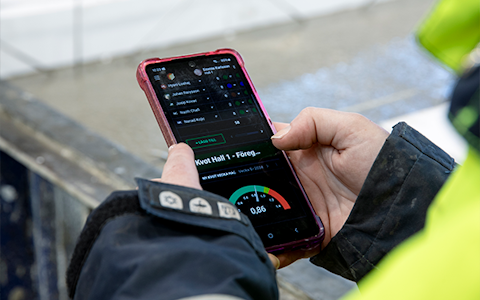
Digital tools for 5S work, recurring audits, and a well-organized workplace.
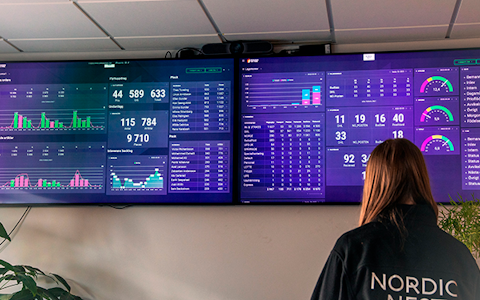
Visualize KPIs and communicate effectively throughout the entire organization.
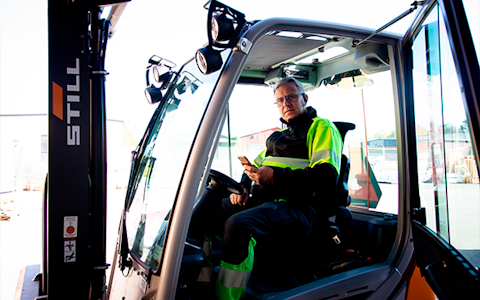
Basic project management and activity boards.
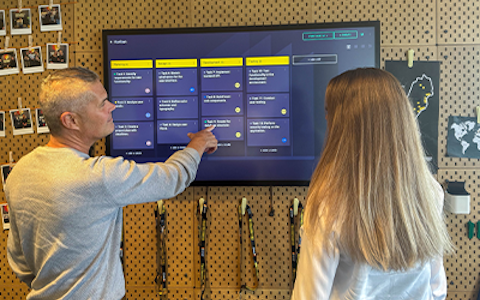
Kanban is a powerful method for visualizing, managing, and optimizing workflows.
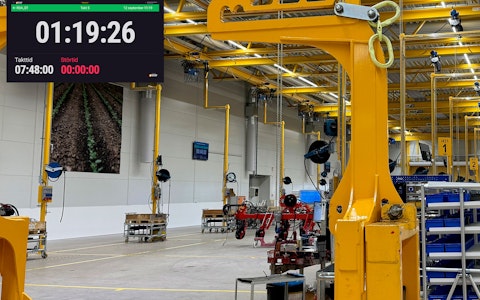
Digital dashboards for takt time flow with takt time counter and stop time log.
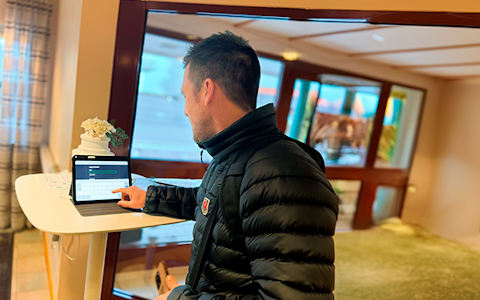
Digital visitor registration provides full control over all planned and executed visits to your business.
Long-term performance is built on clear direction, fact-based decisions, and follow-up that truly drives action. When strategy and daily operations go hand in hand, the organization becomes both stable and ready to grow.
As an Operational Excellence Lead, the mission is to translate goals into concrete ways of working and measurable results. This means turning strategy into structured processes, defining relevant KPIs, and ensuring a follow-up framework that drives the right behaviors. By clarifying responsibilities, analyzing problems, and standardizing workflows, both transparency and efficiency are strengthened.
At the same time, day-to-day operations are often characterized by competing priorities, fragmented information, and improvement initiatives that lose momentum over time. In this context, the role becomes critical in creating focus, maintaining direction, and ensuring that change efforts do not stop at ambition but result in lasting improvements.
Common challenges for Operational Excellens Leaders
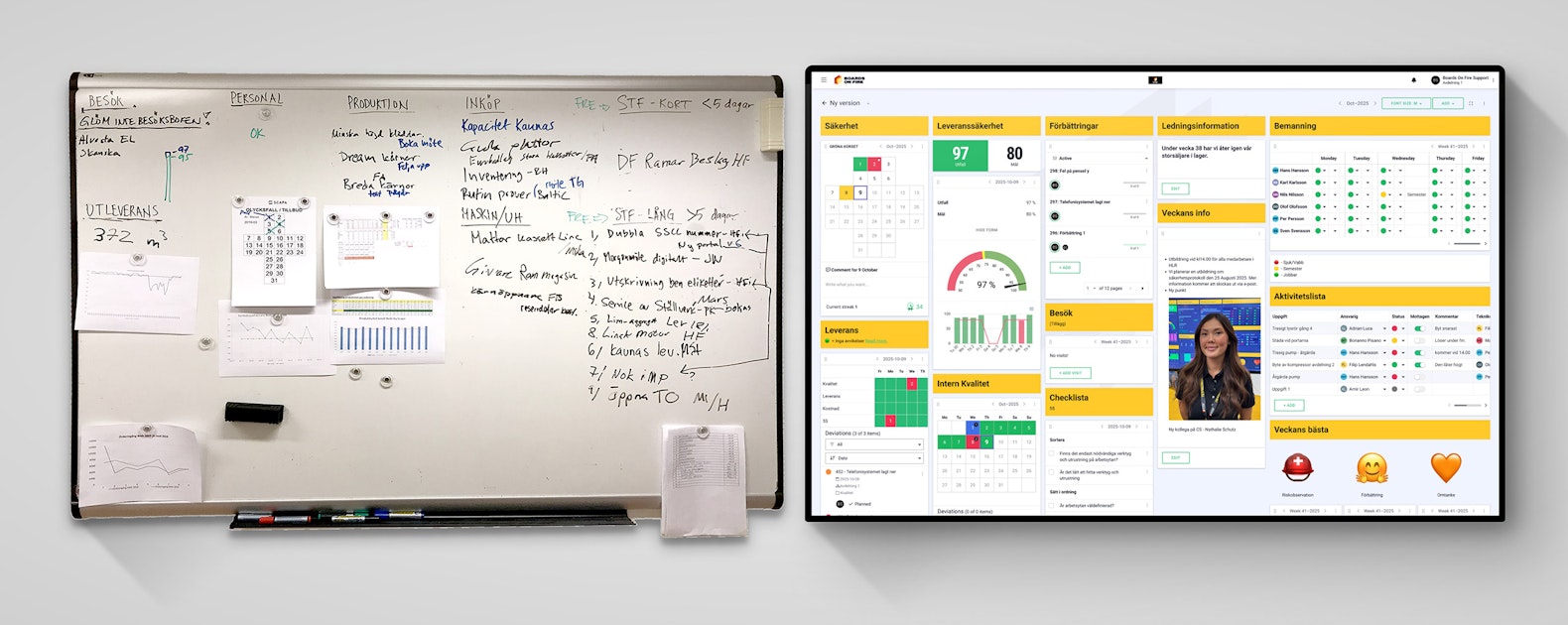
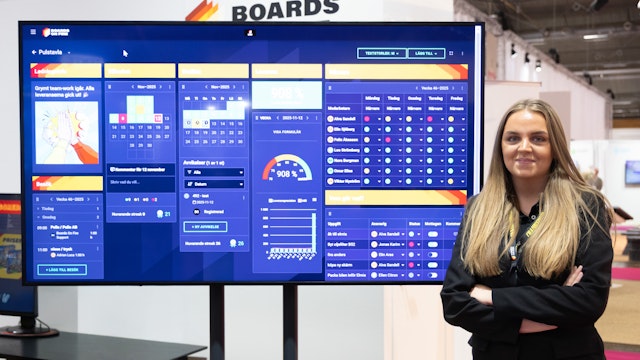
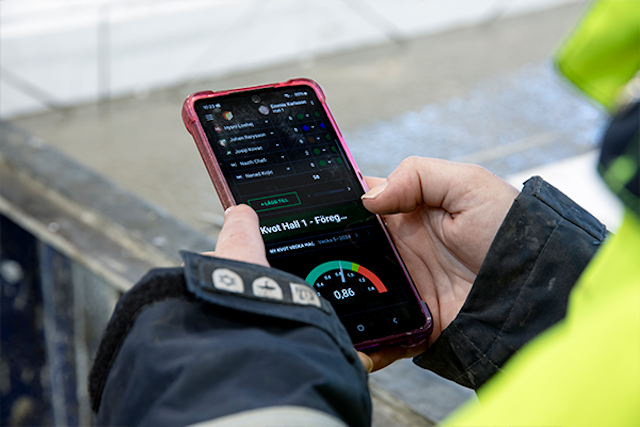
With the goal of making governance simpler, clearer, and more data-driven for roles such as Operational Excellence Lead, Boards on Fire offers a digital solution for daily management. The tool enables organizations to track goals, visualize KPIs, and drive improvements in real time.
Below are some concrete examples of how Boards on Fire supports daily operations:
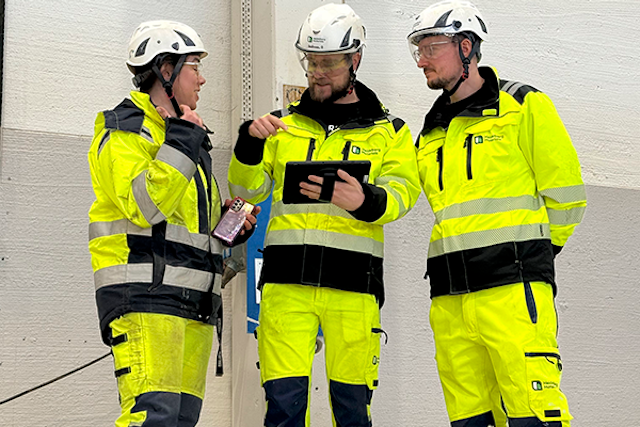
For many organizations, including Assa Abloy in Mölnlycke, challenges such as unclear priorities, inaccessible data, limited execution power, and inconsistent ways of working are common obstacles in improvement efforts. However, after their sister site in Eskilstuna implemented Boards on Fire’s digital solution for daily management and quickly saw results, Mölnlycke decided to follow suit.
We first heard about Boards on Fire through our sister site in Eskilstuna, which had already implemented the tool. What caught our attention was the opportunity to replace multiple systems and manual tools with one shared digital platform where everything, from deviations and improvements to KPIs, is automatically updated and reflected across departments, says Sascha Sager, Operational Excellence Lead at Assa Abloy.
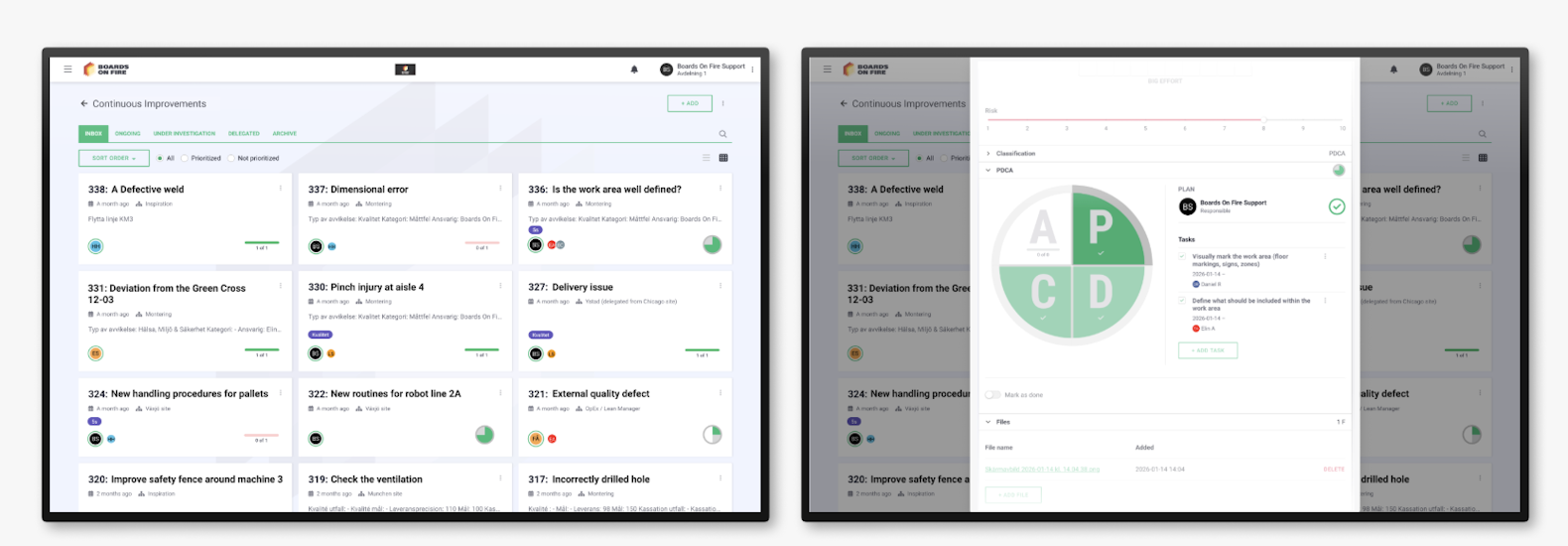
Since the implementation, communication between shifts has become clearer and collaboration across departments has improved, reducing the impact of inconsistent ways of working. All information related to improvement activities—such as 5S checklists, waste walks, and improvement ideas—is managed directly within Boards on Fire. Each activity follows the PDCA principle and is traceable from start to completion, ensuring sustainable execution and higher quality in improvement work.
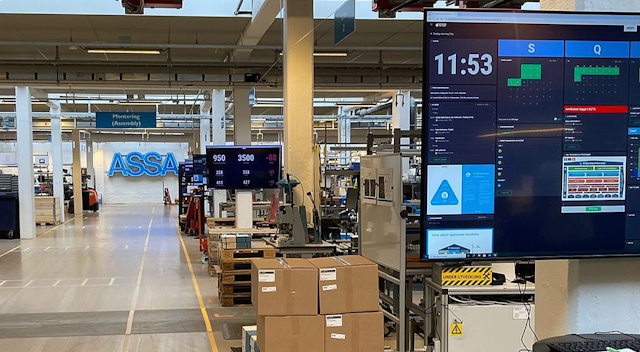
Thanks to the digital platform, the ten team leaders in Mölnlycke save approximately three hours per week each. Previously, manual updates across multiple systems were required, which was both time-consuming and made prioritization more difficult. Now, all data is consolidated in one place—always updated and accessible to both shift managers and operators. The result is faster decision-making, improved follow-up, and clearer, more standardized governance across the entire factory.
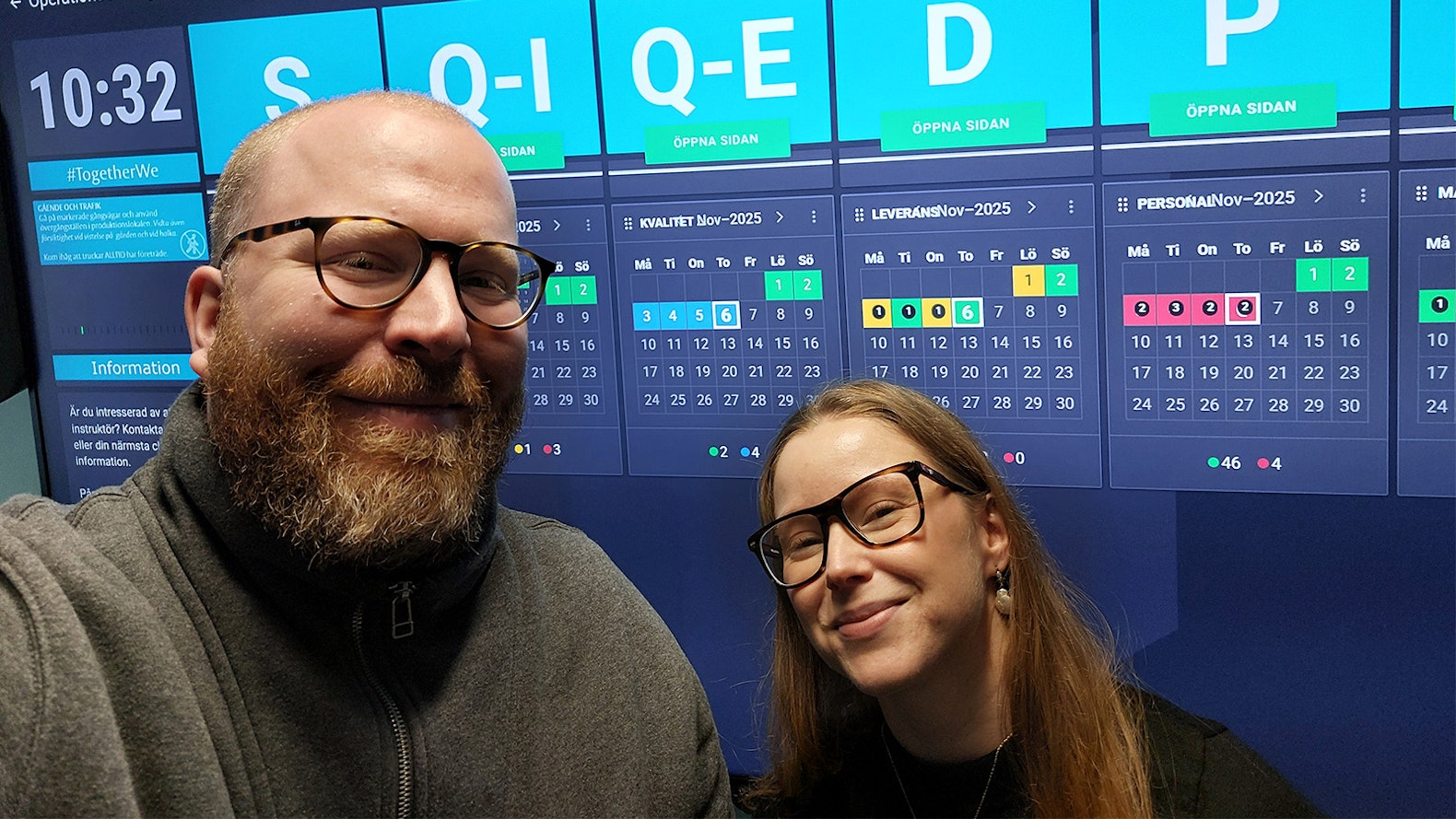
In addition, Assa Abloy has established centralized Operational Excellence boards where site-wide KPIs are monitored in real time, providing full visibility and making improvement work even more data-driven and effective.
For organizations aiming to gain better control over daily management, some key takeaways include:
For an Operational Excellence Lead, the ability to apply established improvement methodologies such as Lean, Six Sigma, 5S, PDCA, and Kaizen is essential. These frameworks enable structured execution, root cause analysis, and measurable impact.
Boards on Fire makes it easy to implement and follow up on these methodologies digitally. The platform connects activities to responsible owners, visualizes progress in real time, and ensures that improvements—whether related to 5S initiatives, Kaizen activities, or PDCA cycles—are tracked and executed consistently. This enables standardization across teams and departments, making improvement work both structured and sustainable.
Explore our different boards and learn how they create impact here!
Long-term performance relies on clear priorities, follow-up that drives action, and standardized ways of working. Digital visual management with Boards on Fire makes this a reality: all goals and improvements are visible, responsibilities are clear, data is accessible, and teams can act faster.
The result is sustainable improvements, more effective decision-making, and a more aligned organization.
Free web demo