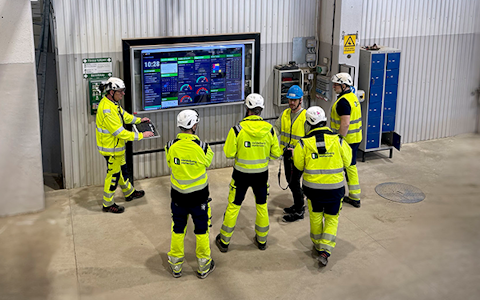
Digital dashboards that help you identify deviations and make the right decisions.
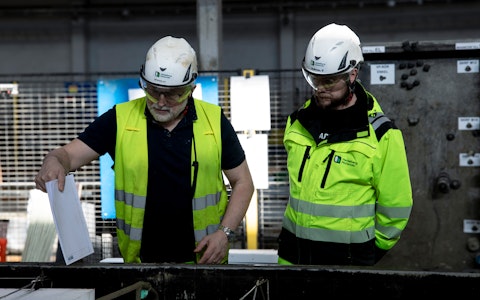
Capture your deviations and turn them into improvements
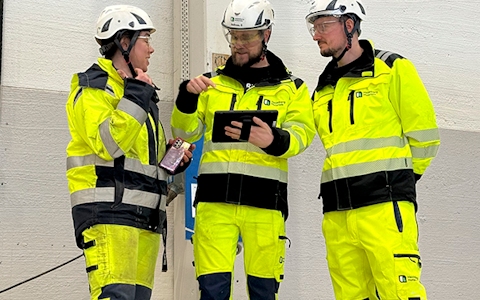
Continuous improvement, Kaizen boards, PDCA and other tools.
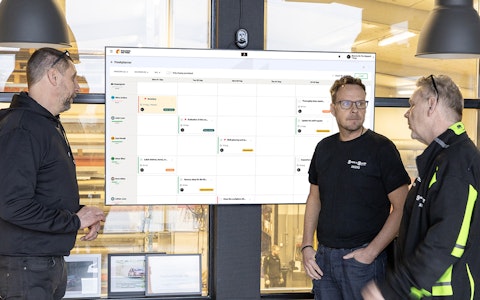
All your team’s tasks, neatly organized in one weekly view.
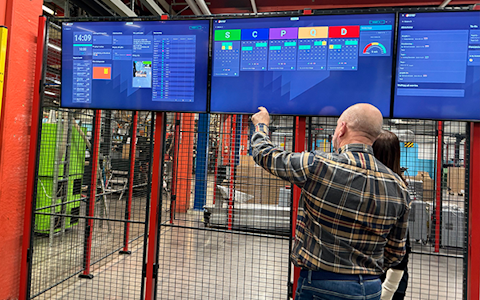
Improve key performance indicators within your specific focus areas with our SQCDP board.
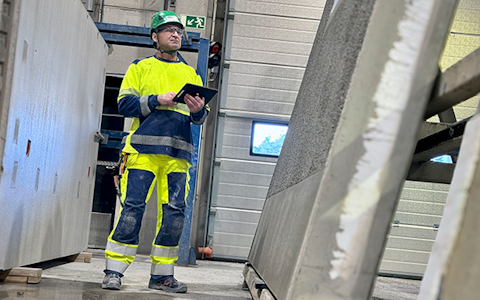
Use the PDCA cycle as a tool to improve both quality and processes
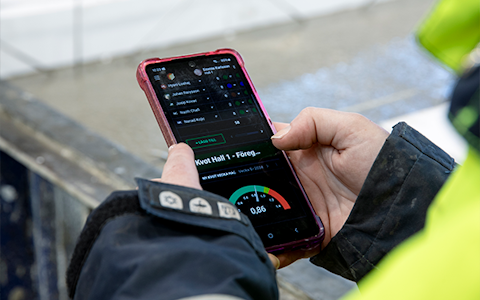
Digital tools for 5S work, recurring audits, and a well-organized workplace.
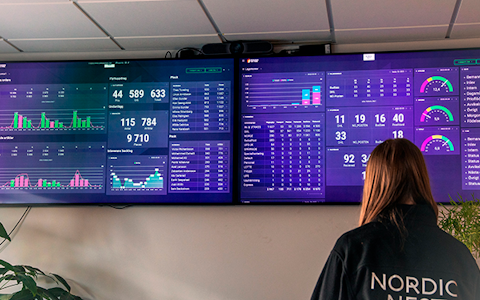
Visualize KPIs and communicate effectively throughout the entire organization.
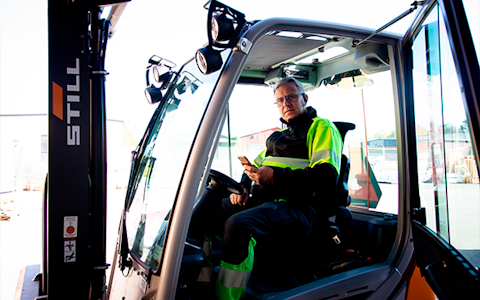
Basic project management and activity boards.
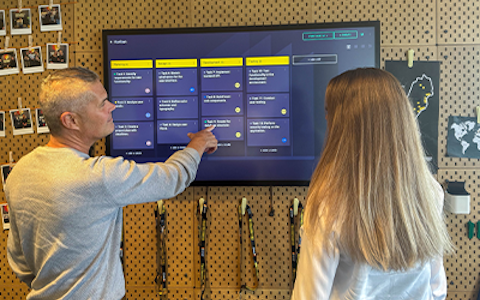
Kanban is a powerful method for visualizing, managing, and optimizing workflows.
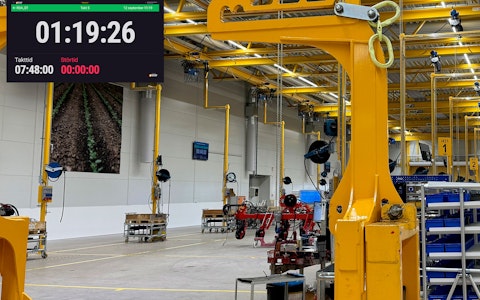
Digital dashboards for takt time flow with takt time counter and stop time log.
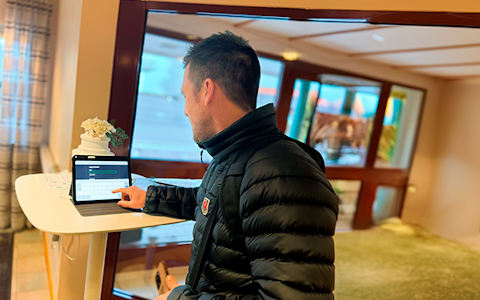
Digital visitor registration provides full control over all planned and executed visits to your business.
In the Manufacturing Industry, Environmental and Quality Managers Play a Central Role in ensuring that operations comply with both internal procedures and external regulations. Their work is essential for maintaining high quality, reducing environmental impact, and continuously improving processes.
Typical responsibilities include:
Everyday work often comes with practical challenges that make the role both time-consuming and complex. Some of the most common challenges include:
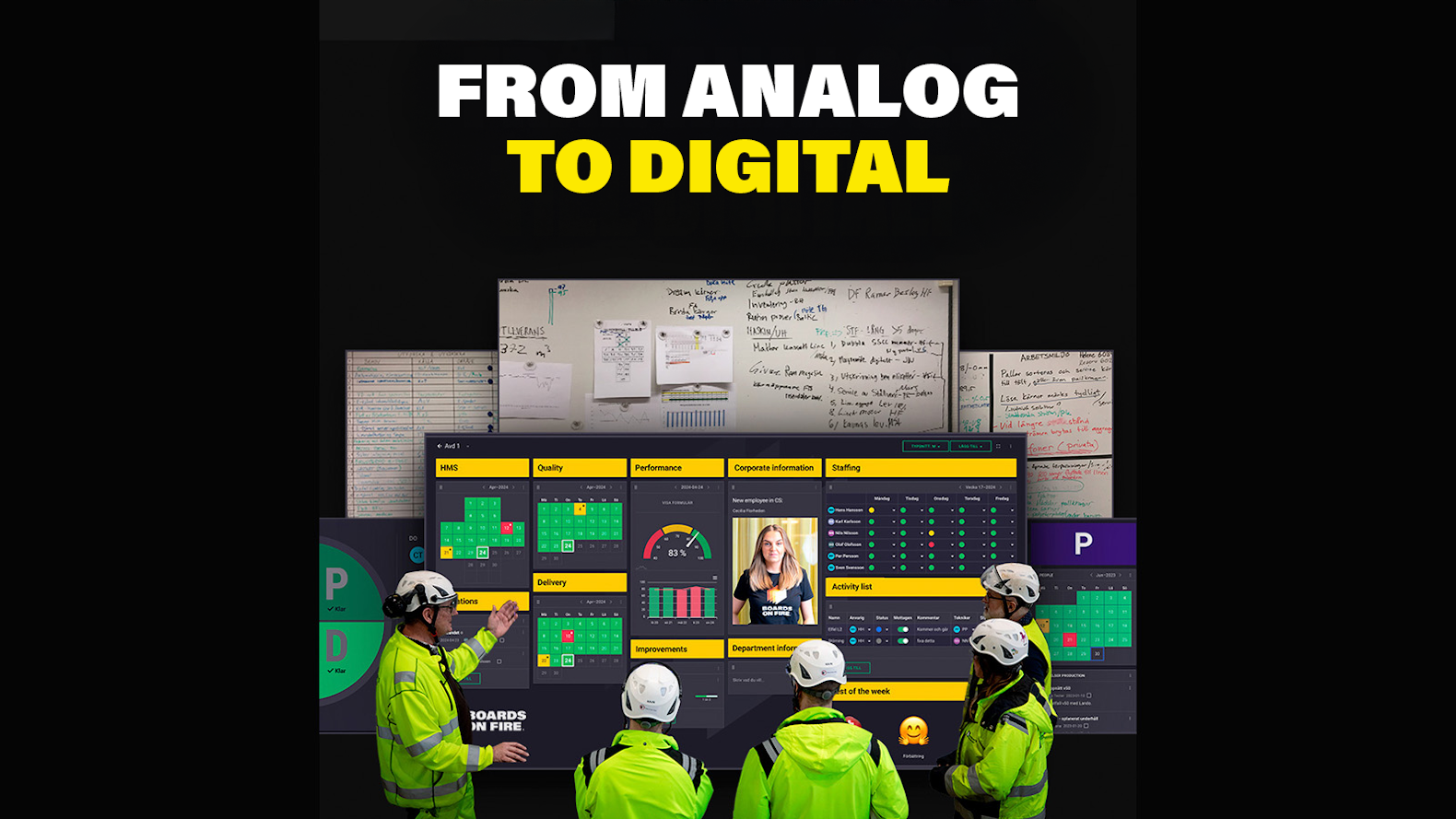
Digital tools like Boards on Fire enable environmental and quality managers to handle these challenges in a structured, data-driven way.
With digital daily management you can:
Learn more about how Boards on Fire can simplify and streamline your daily work!
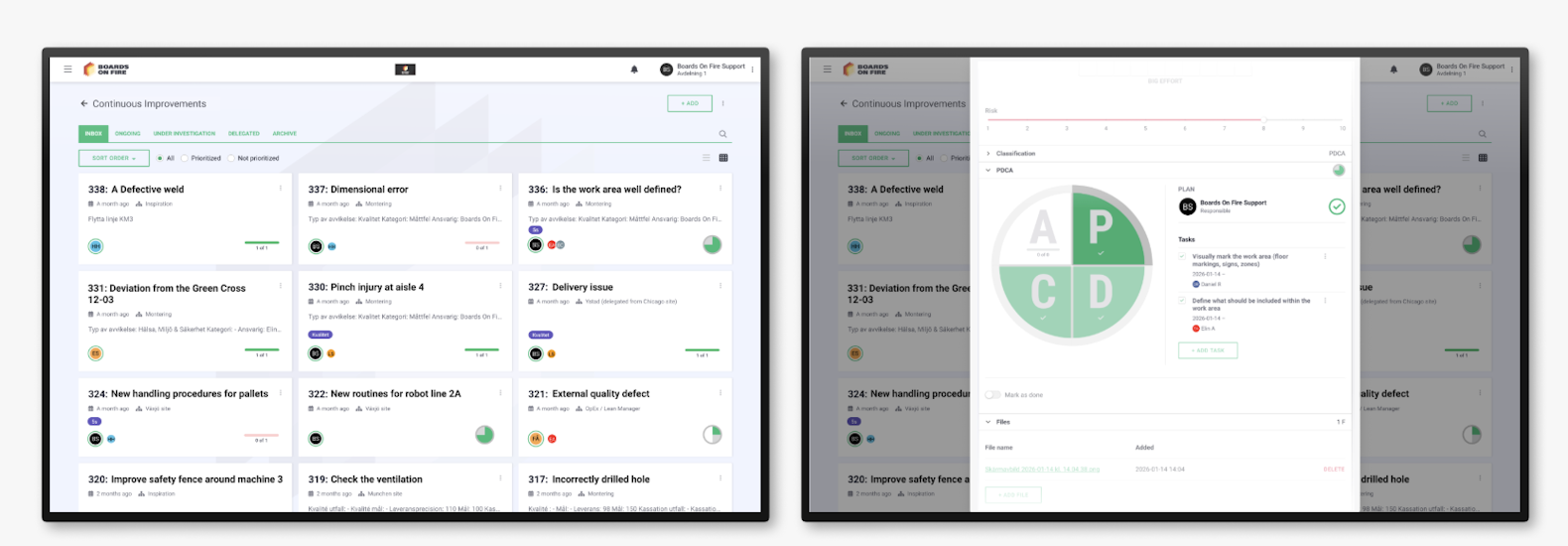
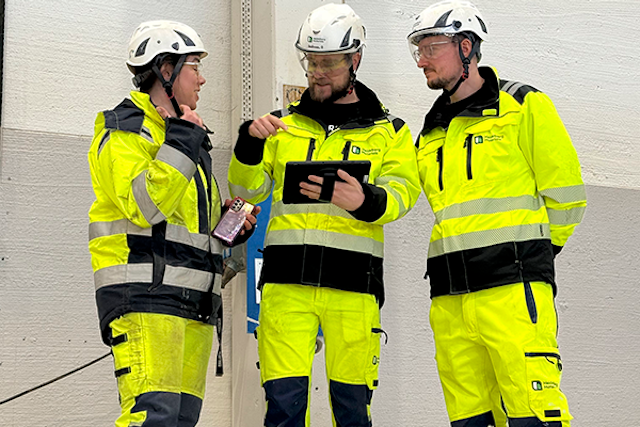
Elektromontage, an electrical engineering company, has been using Boards on Fire for about six months and has already seen clear positive effects. Sebastian Edänge, Quality and Environmental Manager, describes how the tool has transformed his daily work from several perspectives:
Since Sebastian started using Boards on Fire, handling deviations has become significantly smoother. All relevant information, including photos, is gathered in one place, making it easy to follow up on deviations and other critical information in real time. Teams can see for themselves how deviations are being handled on their boards, which increases transparency and creates clear ownership. Important issues are highlighted and integrated with other improvement initiatives, instead of risking being overlooked.
"The biggest difference for me is that deviations are now an active and integrated part of the teams’ daily operations. Quality meetings require minimal preparation, and the focus can be on analysis, prioritization, and concrete actions that improve both quality and environmental work," says Sebastian.
He also notes that quality meetings have become much more efficient. Preparations no longer take as long because all information is already in Boards on Fire and can be easily visualized for everyone. This makes collaboration around issues much easier.
Environmental and quality managers play a central role in ensuring quality, reducing environmental impact, and driving improvements. Daily operations can be complex, with scattered issues, unclear responsibilities, and time-consuming administrative work. This is where Boards on Fire’s digital solution for daily management comes into play.
Boards on Fire makes work easier through real-time overviews, clear transparency, and structured follow-up of deviations and KPIs. Teams can track their issues, and improvement work becomes a natural part of everyday routines. For Sebastian Edänge at Elektromontage, the tool has made quality meetings smoother and freed up time for analysis, prioritization, and concrete actions that strengthen both quality and environmental performance.
Free web demo