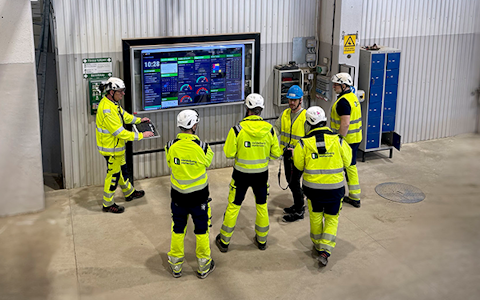
Digital dashboards that help you identify deviations and make the right decisions.
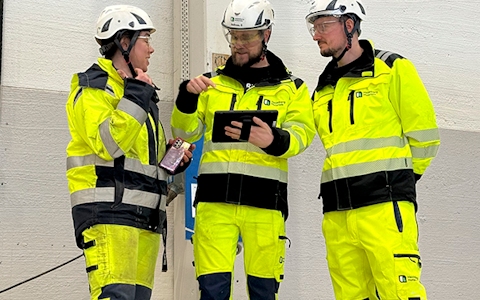
Continuous improvement, Kaizen boards, PDCA and other tools.
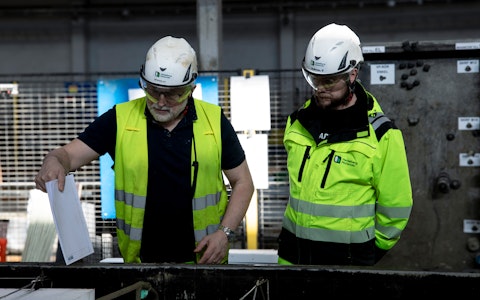
Capture your deviations and turn them into improvements

Real-time control for takt-based production. Detect disruptions as they happen, respond faster, and keep production on pace.

Integrate Boards on Fire with ERP, MES, OEE, Power BI and other systems. Automate data flows, reduce administration and act faster.
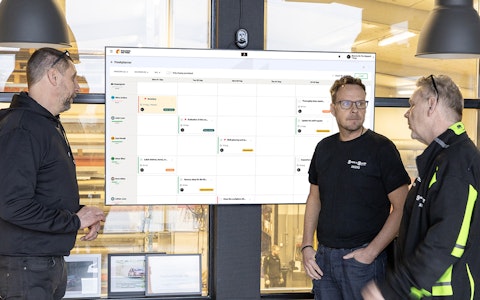
All your team’s tasks, neatly organized in one weekly view.
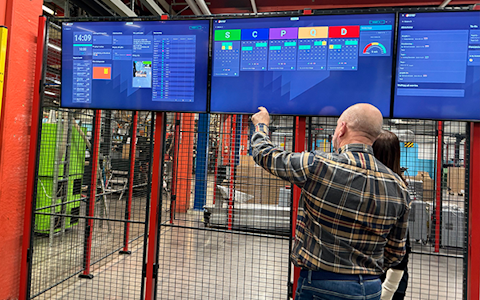
Improve key performance indicators within your specific focus areas with our SQCDP board.
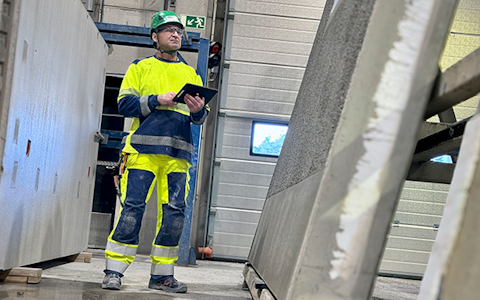
Use the PDCA cycle as a tool to improve both quality and processes
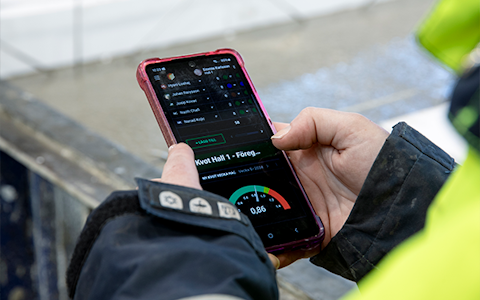
Digital tools for 5S work, recurring audits, and a well-organized workplace.
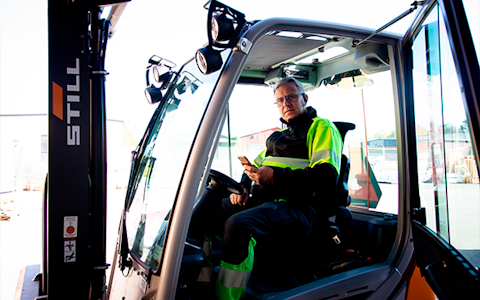
Basic project management and activity boards.
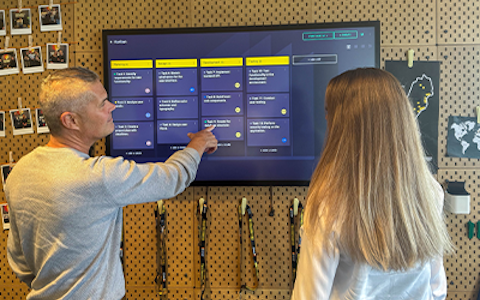
Kanban is a powerful method for visualizing, managing, and optimizing workflows.
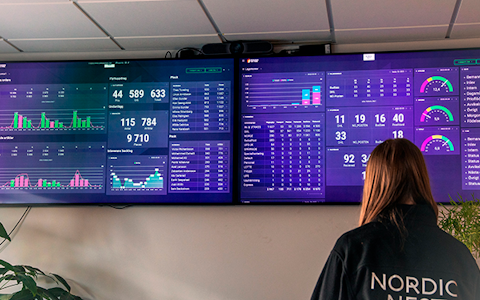
Visualize KPIs and communicate effectively throughout the entire organization.
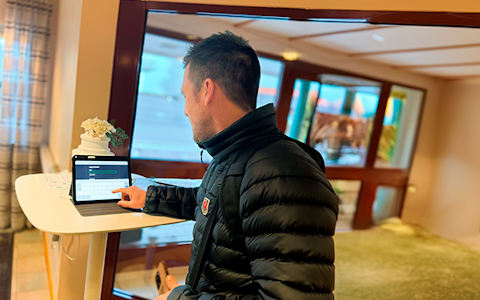
Digital visitor registration provides full control over all planned and executed visits to your business.
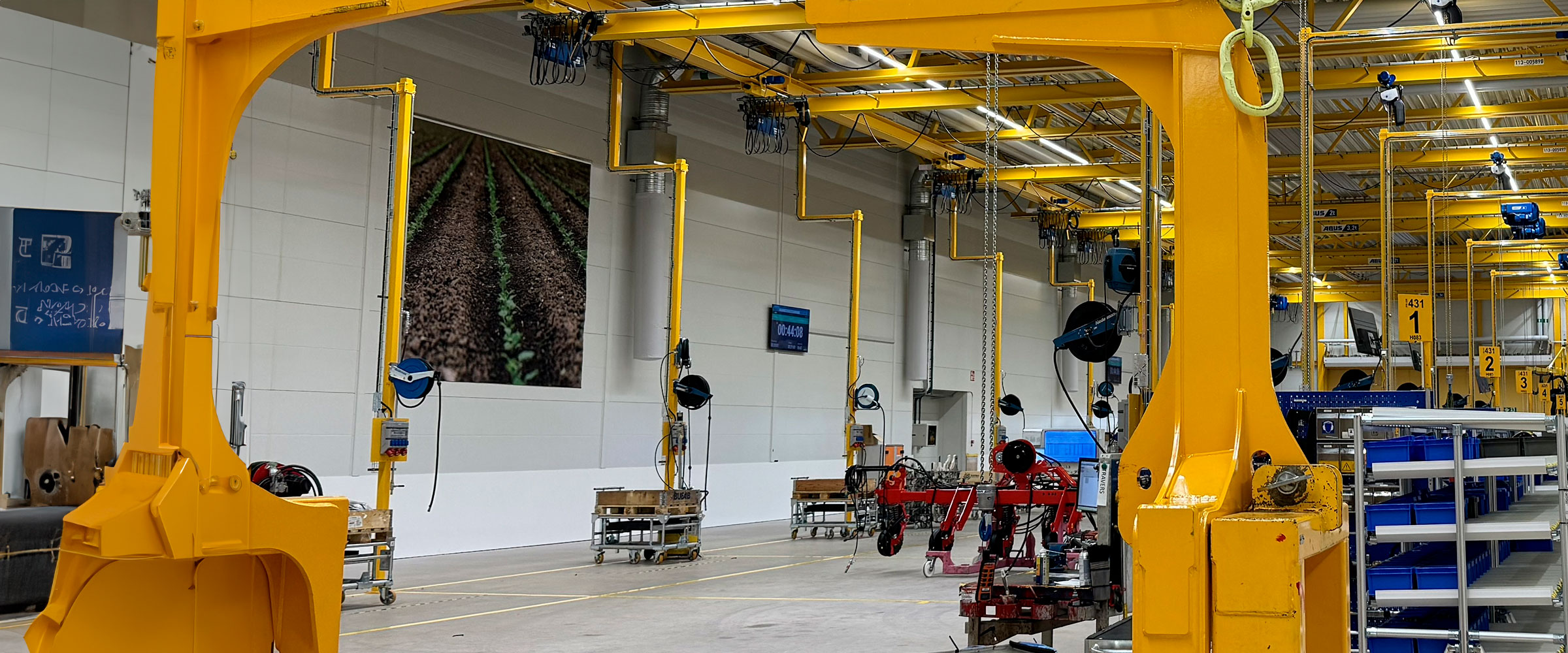
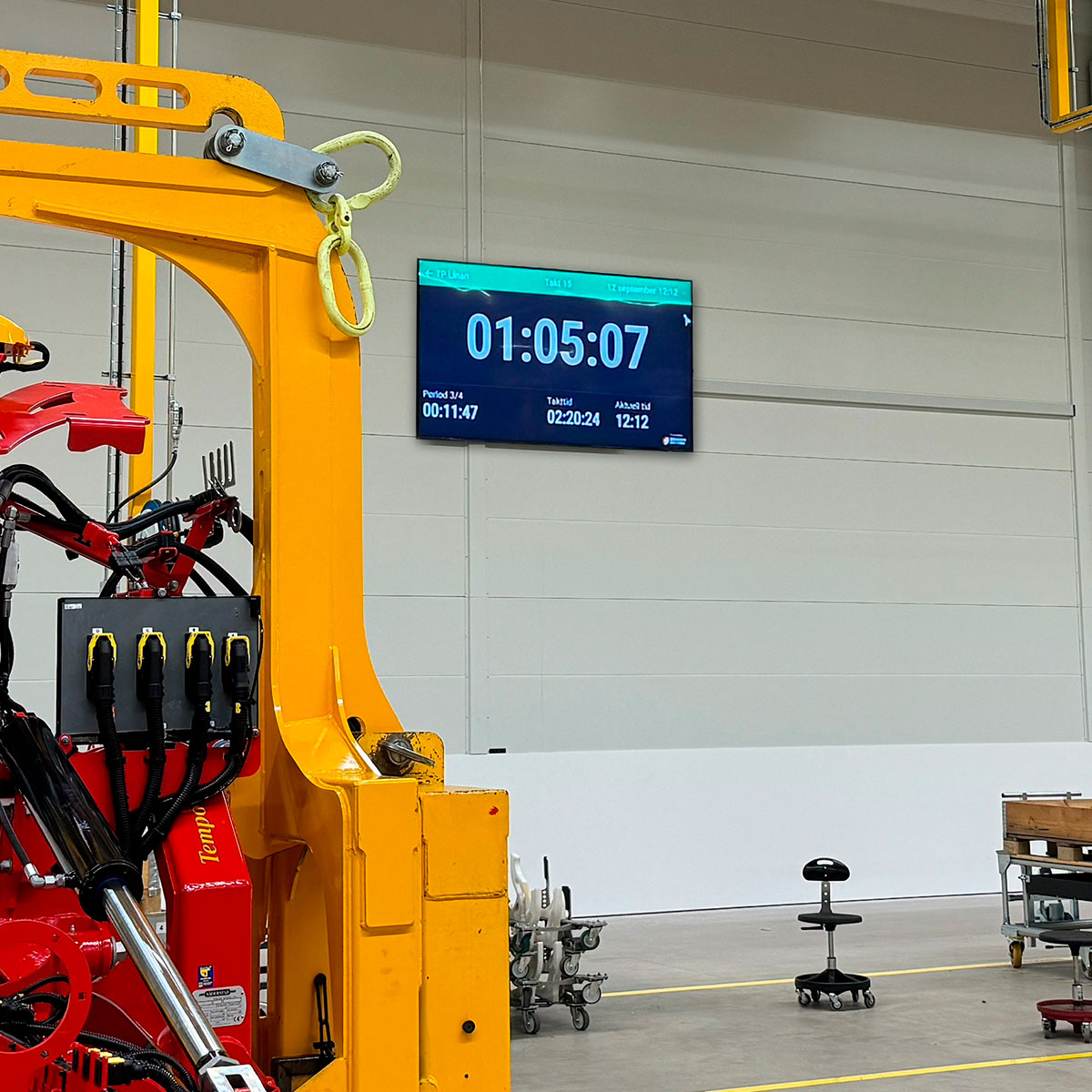
Detect disruptions as they happen, coordinate the right response, and give stations, teams, and management a shared view of the production flow. Boards on Fire TAKT helps you act before small deviations become major problems.













When production falls behind takt, it costs more than you think. One station falls behind. The next station has to wait. Materials are missing. Information remains local. By the time the deviation becomes visible, it has already affected several parts of the production flow. The result is replanning, lower productivity, delivery delays, and higher costs.
You cannot control what you cannot see. TAKT makes losses in production rhythm visible while there is still time to act.
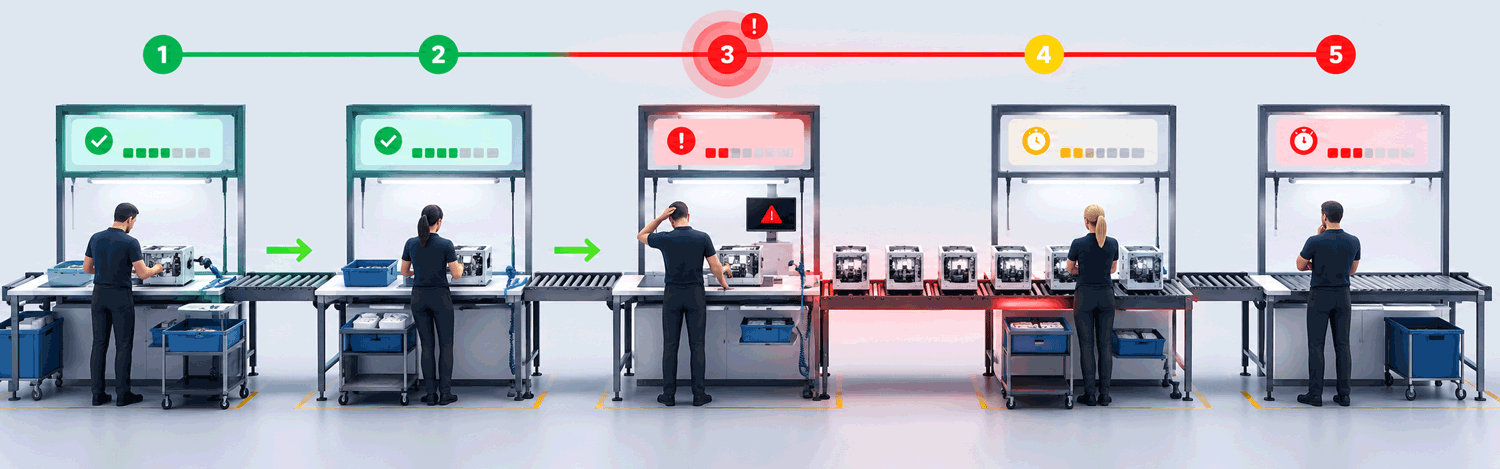
Boards on Fire TAKT is an operational tool for production teams that need to control the flow here and now. The solution visualizes takt and status, captures disruptions, and creates a shared way of prioritizing, escalating, and following up on deviations. Everyone can see what is happening, where the flow is losing pace, and what needs to be done.
Make the flow visible: See the current takt, status, and deviations for each station. Identify where production is falling behind before the issue affects the entire line.
Respond faster: Make disruptions visible immediately and bring the right people together around the right action, while there is still time to influence the outcome.
Create a shared production rhythm: Give operators, material supply teams, production management, and other stakeholders the same operational picture and the same priorities.
Turn deviations into improvements: Capture disruption data, identify recurring patterns, and create a stronger foundation for systematic problem-solving and continuous improvement.
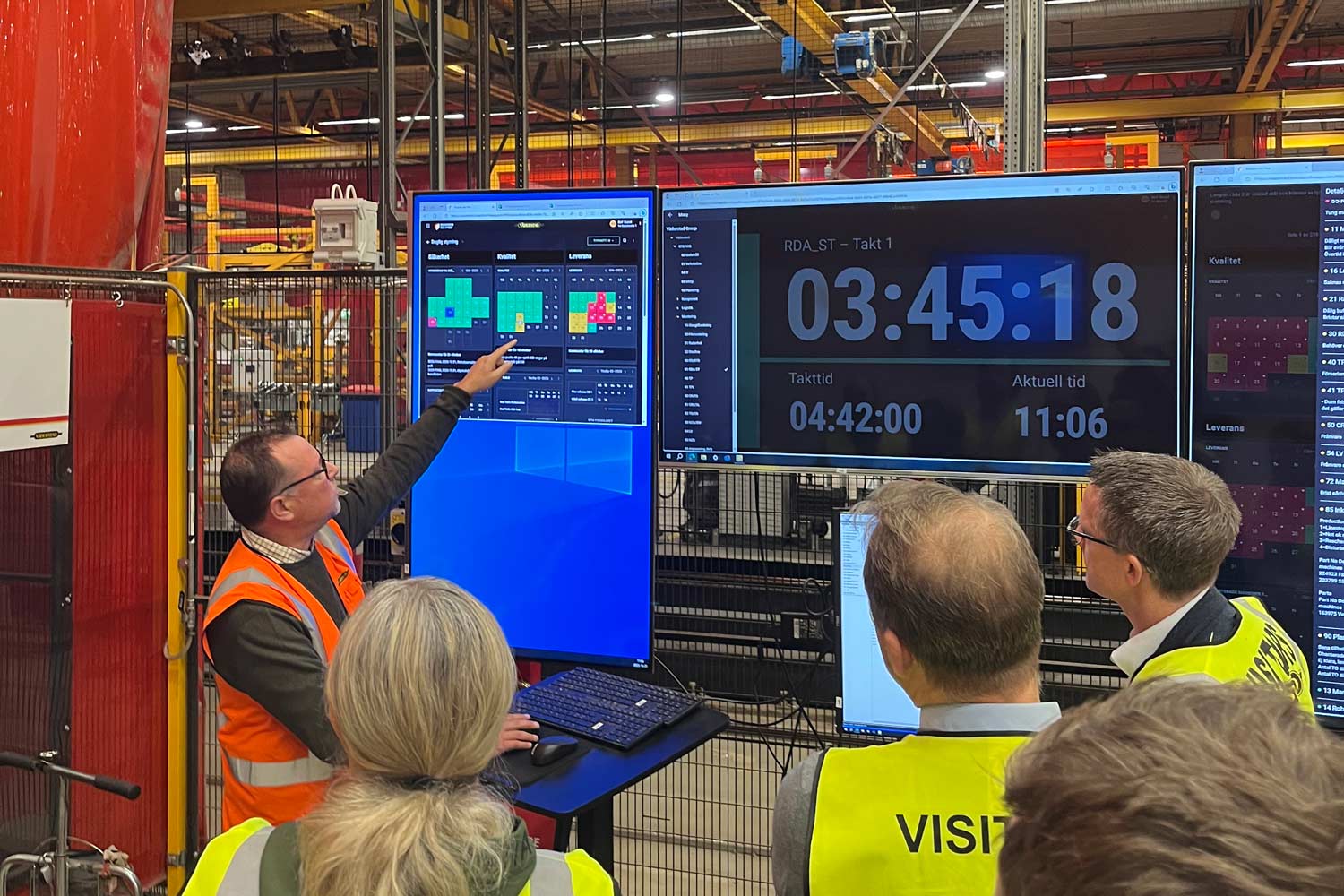
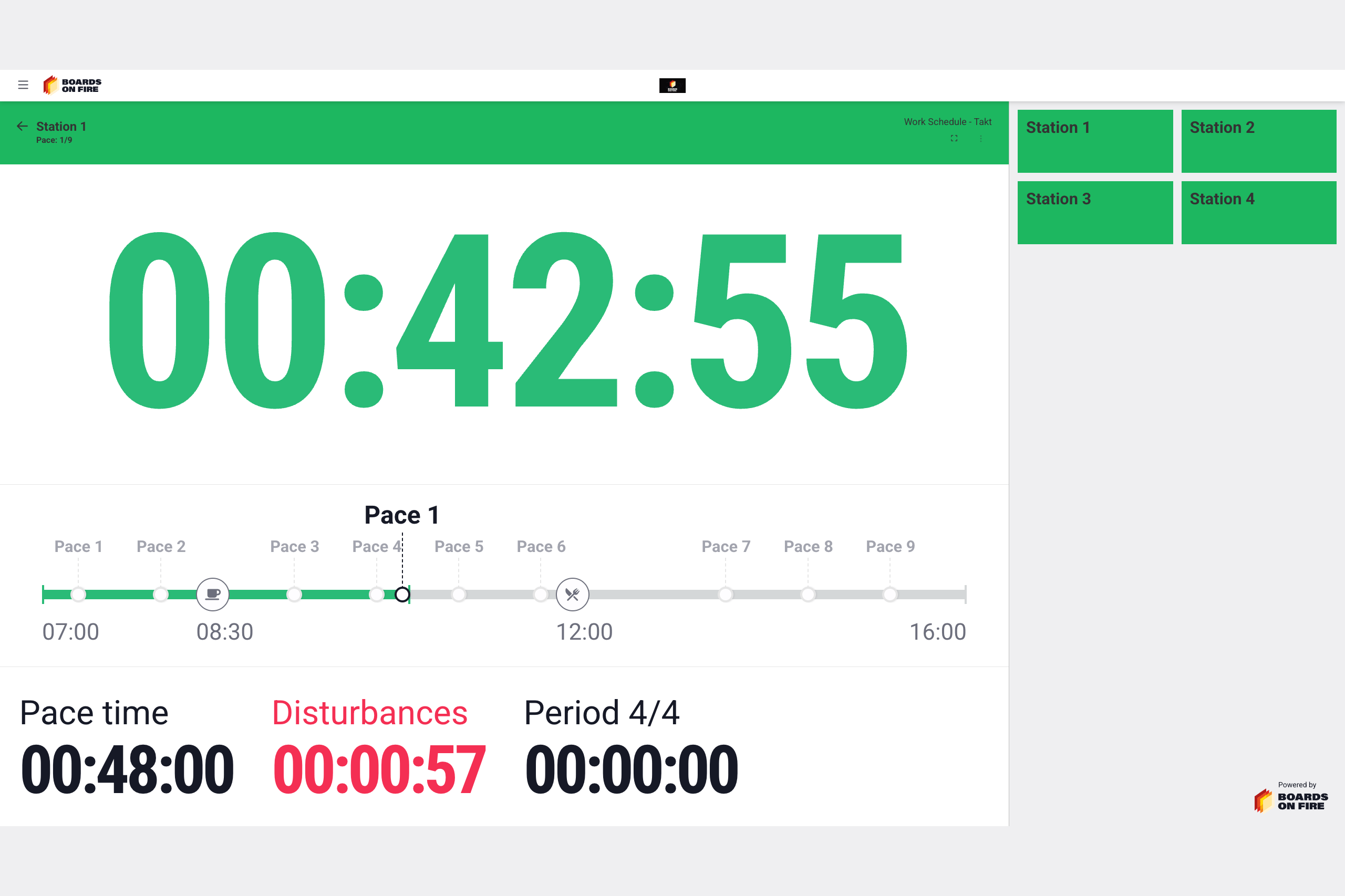
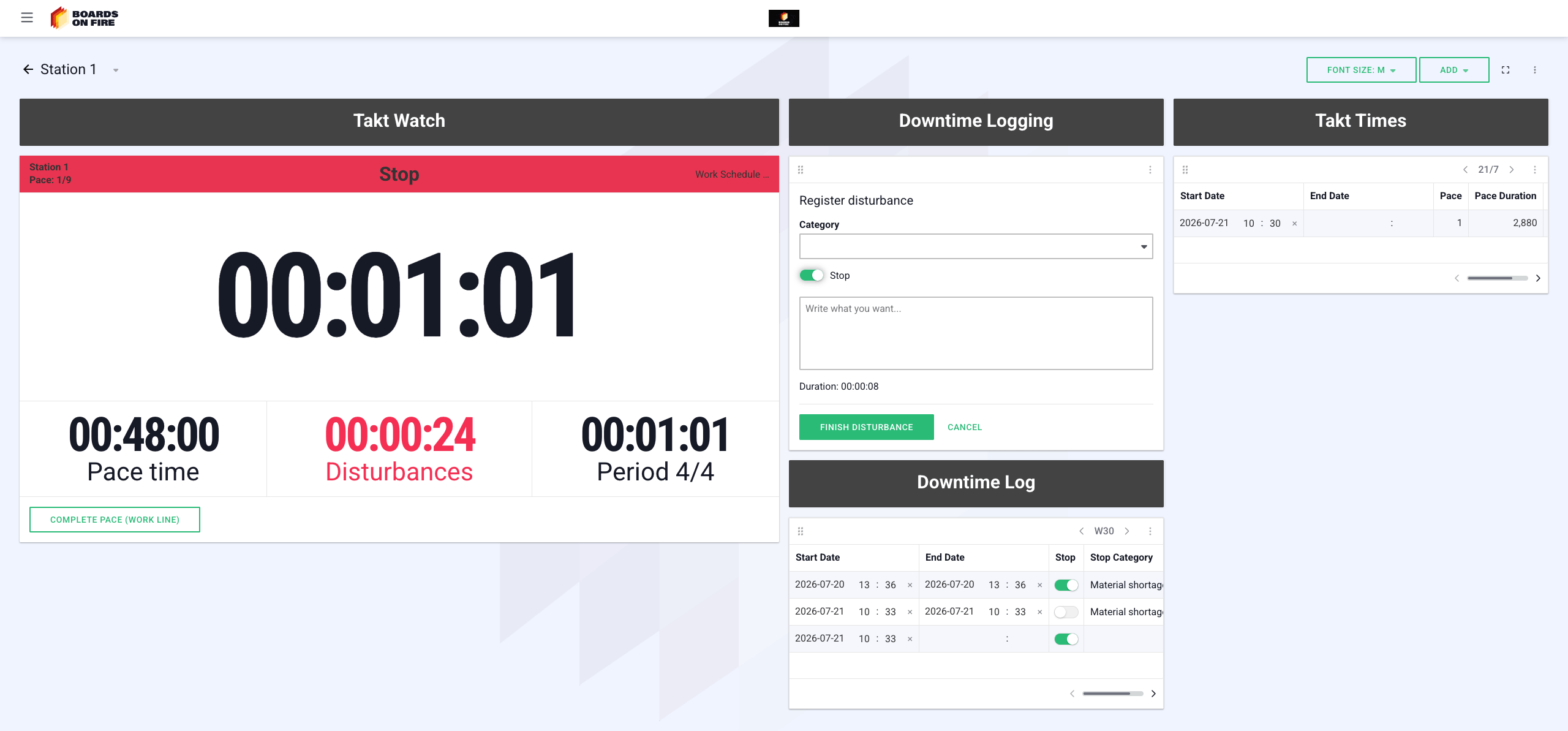
 The same information for operators and management. Current takt and remaining time, planned takt time, registered disruption and downtime and clear status for each station.
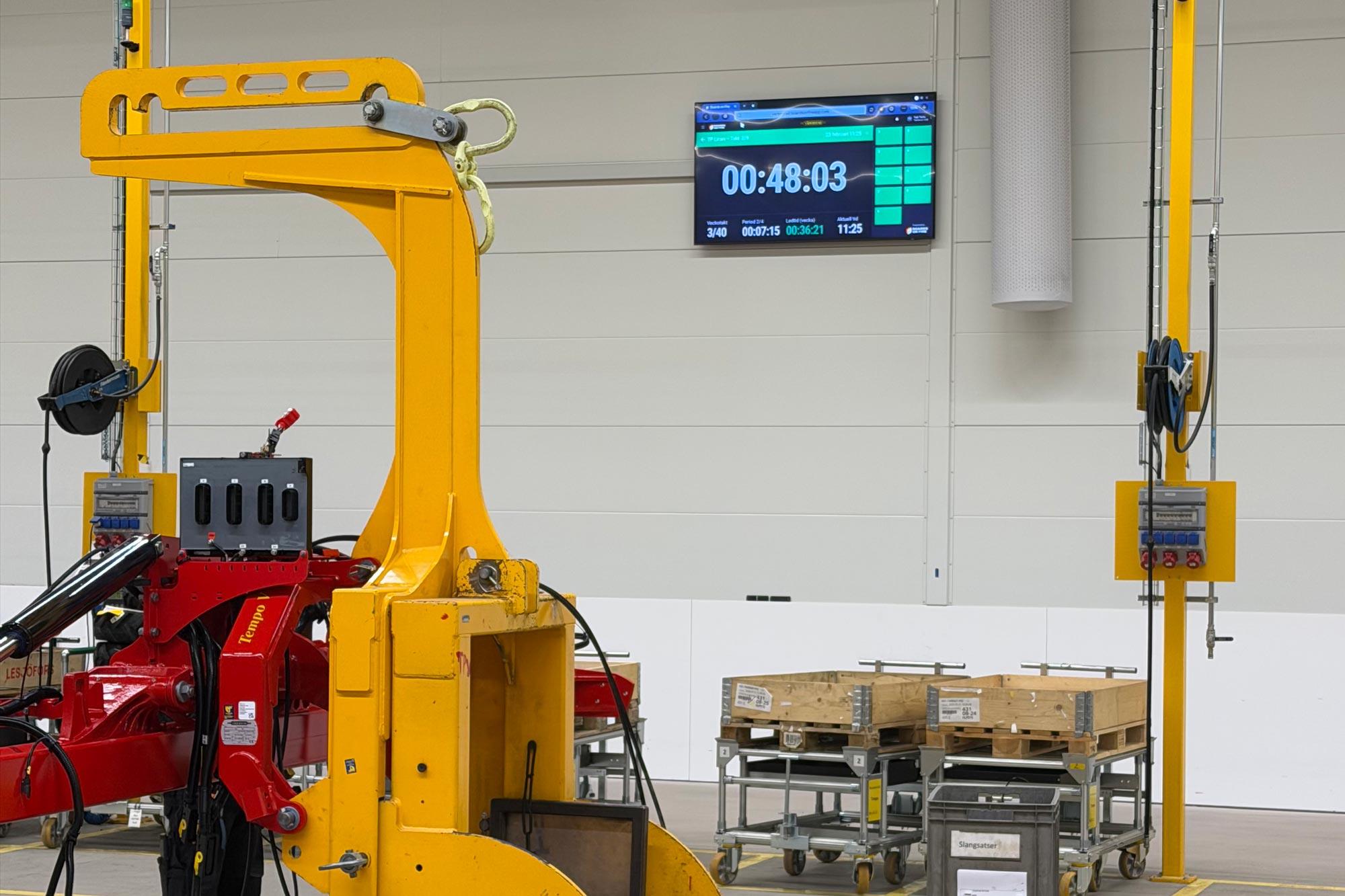
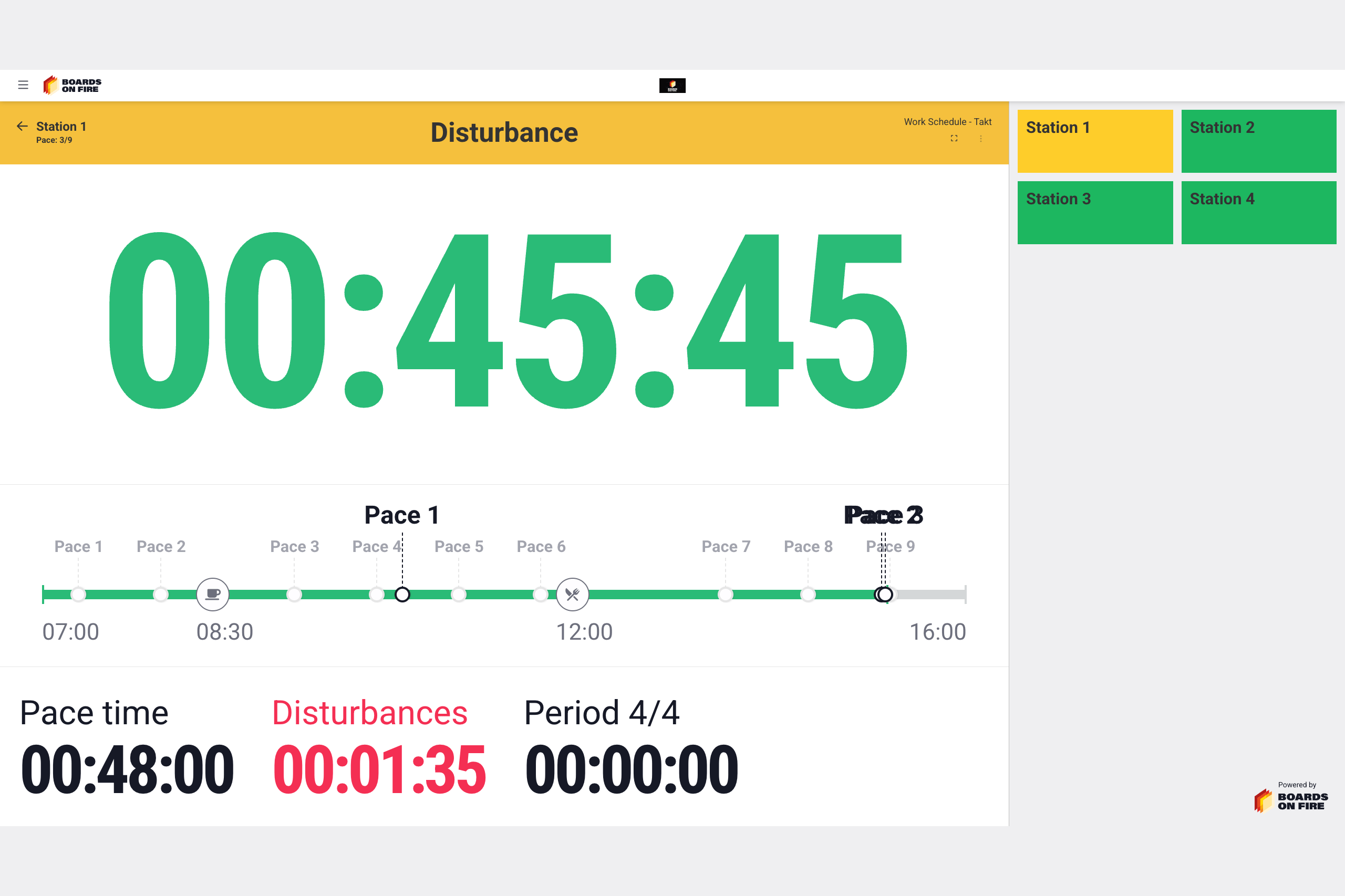
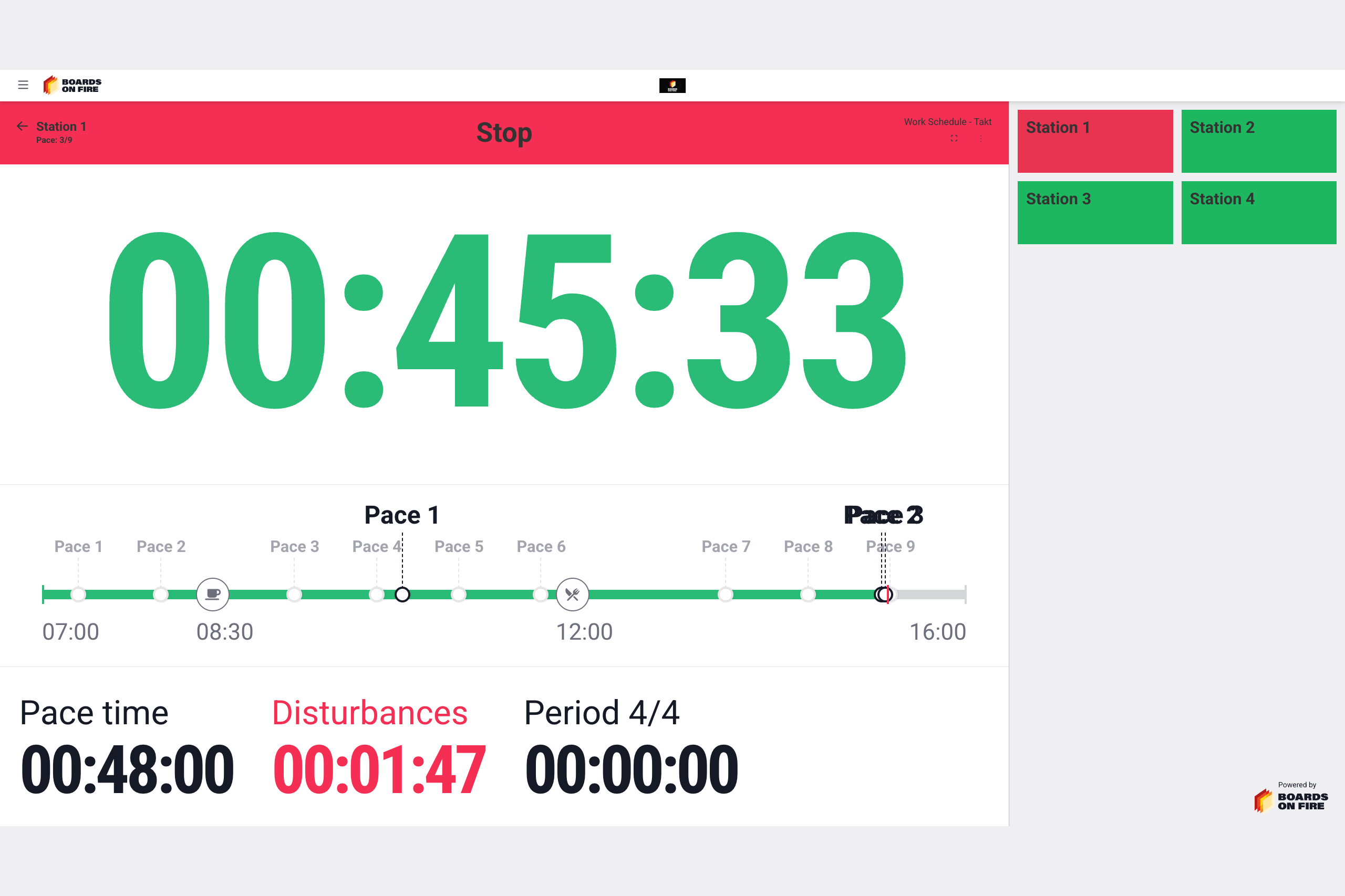
The takt board displays the countdown for the current takt cycle, planned takt time, registered disruption time, and current production status.
Clear visual signals make it easy to see whether work is progressing according to plan, whether a deviation requires attention, or whether production has stopped.
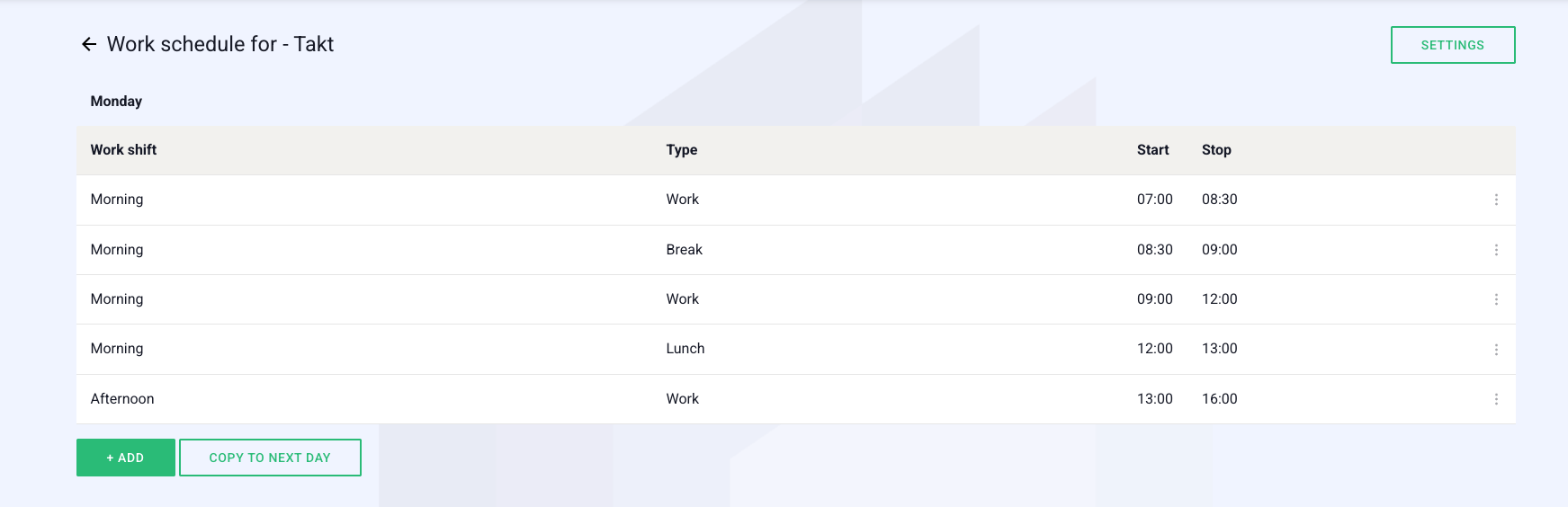
Add weekly schedules, shifts, breaks, and other planned pauses. The takt clock follows the periods when production is actually expected to be active, giving every station a clear and shared rhythm. Takt times and schedules can be adapted to the way your production flow is organized, so the board reflects your operation, not the other way around.
When a station falls behind takt, it should be easy to communicate what has happened. Employees can quickly register the station, category, downtime, and a short comment. The deviation becomes visible immediately, can be managed through your escalation process, and is stored for follow-up.
When deviations are captured consistently, it becomes easier to allocate the right resources, identify root causes, and prevent the same problems from recurring.
A takt problem is rarely isolated to one station. Material supply, staffing, quality, and previous production steps can all affect whether takt is maintained.
When everyone involved sees the same status, it becomes easier to:
Not everyone needs to see everything. But everyone needs to see what they require in order to act.
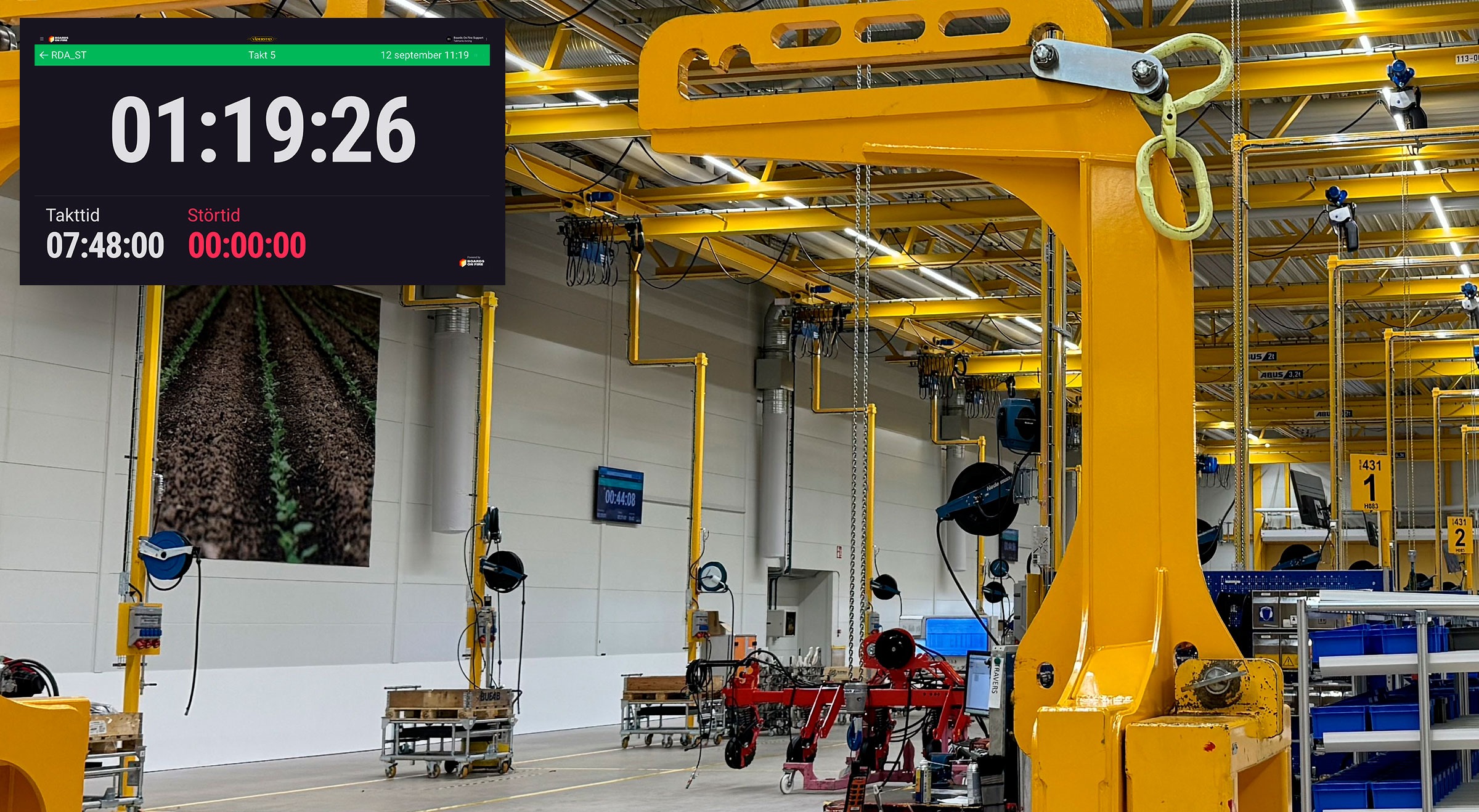
Väderstad, an agricultural machinery manufacturer, uses Boards on Fire TAKT to manage its assembly flow. The result is a more consistent production pace, higher efficiency, and increased capacity.
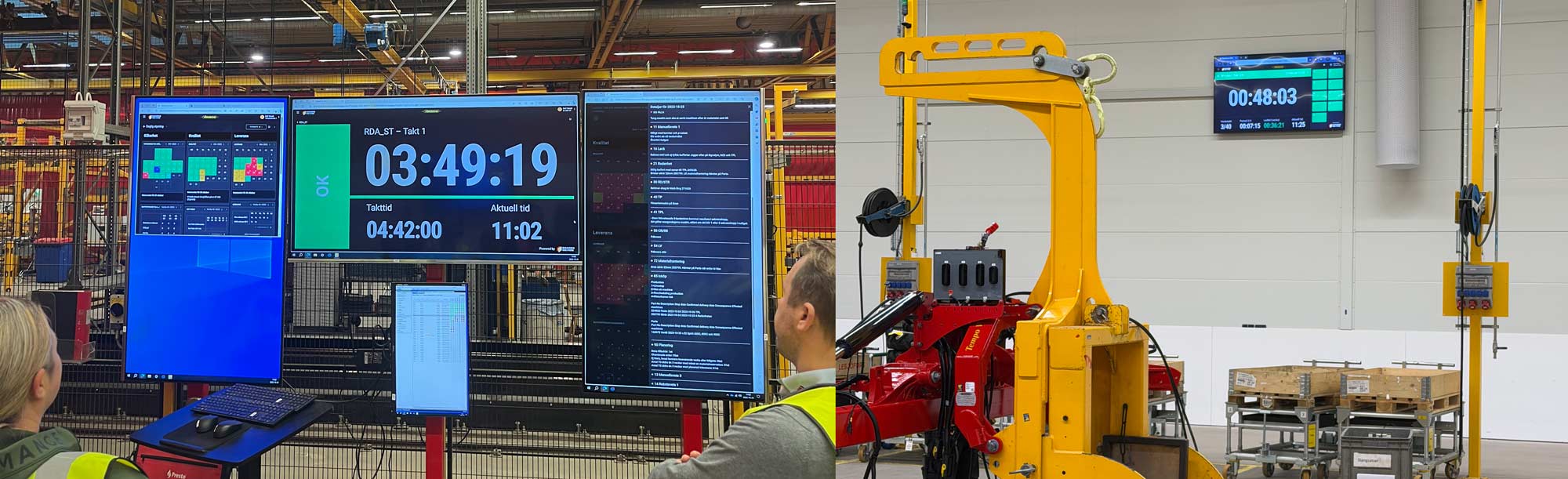
"The system is incredibly easy to set up and get started with, and it doesn't require any advanced IT infrastructure. Everyone in the organization now has a shared view of the production flow, making it easy to identify and address deviations."
Johan Elmenius
Head of the Väderstad Production System
Free web demo
Whiteboards and manual follow-ups can provide a local snapshot. MES and ERP systems provide important production data, planning, and historical information. Boards on Fire TAKT complements these systems with the operational support production teams need to act when a deviation occurs.
Whiteboards and spreadsheets: They provide a local overview but require manual updates. Information quickly becomes outdated and is difficult to share across stations and teams.
MES and ERP systems: They provide valuable data, planning, and historical insight, but are not always designed to support an immediate operational response on the production floor.
Boards on Fire TAKT: It makes the current production rhythm and deviations visible where the work happens, helping teams prioritize and act immediately.
Keep your way of working. Modernize the solution. You do not need to start over or replace a methodology that already works. Boards on Fire TAKT gives you a modern, cloud-based alternative that is easier to implement, manage, and scale without costly, vendor-specific specialist hardware.
Boards on Fire TAKT is built for flows where every station affects the next. It is particularly well suited to production environments where several workstations, teams, or processes need to operate in sync, and where disruptions quickly become costly.
When takt, disruptions, and response are visible within the same flow, the operation is better equipped to:
It is not only about showing what is happening. It is about helping the organization do something about it.


